About this course
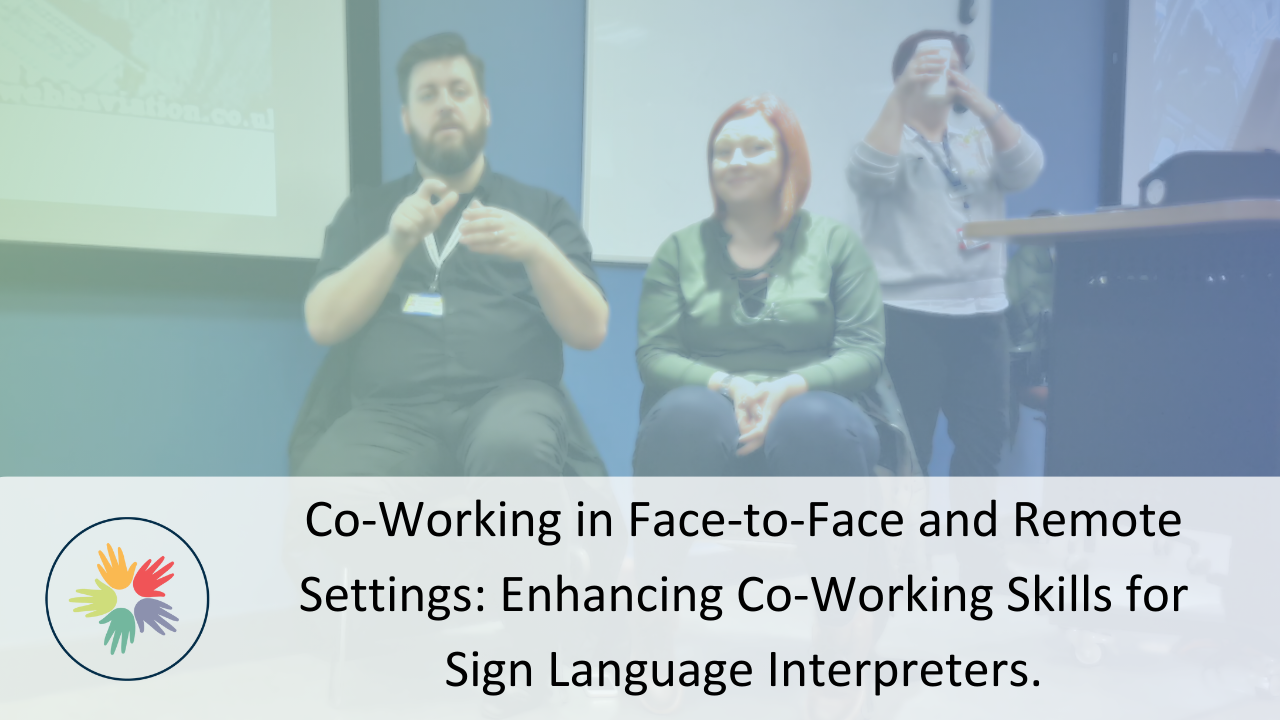
Interpreters work together regularly, but the experience can vary depending on confidence, communication and the environment you’re working in. Good coworking supports accuracy, consistency and flow, and it has a clear impact on the client’s experience. This session looks at what effective teamwork involves and how you can build stronger, more reliable partnerships in both online and face-to-face settings.
We’ll explore what the current National Occupational Standards expect from interpreters when working as part of a team and how those expectations look in real day-to-day practice. You’ll look at practical strategies for preparation, communication, turn-taking and support, with examples from across different interpreting domains.
This session is suitable for interpreters who feel unsure about co-working or don’t yet have much experience, as well as those who have been working in teams for years and want a refresher on good practice. It’s also a chance to check how your current approach aligns with today’s National Occupational Standards.
You’ll also be introduced to reflective tools to help you review your teamwork, spot patterns and identify areas you want to develop further. Whether you’re building confidence or refreshing established skills, you’ll leave with ideas and practical steps you can use straight away.
If you want to improve the quality of your teamwork, feel more confident when supporting or being supported by another interpreter, and offer clients a smoother interpreting experience, this session will be a strong fit.
Learning outcomes
- How coworking works in remote and face-to-face settings and how to adapt your approach
- • What the National Occupational Standards say about working in teams
- • Practical strategies for building effective partnerships and supporting each other’s work
- • Reflective tools to help you review and strengthen your practice
Live, interactive and supported
This is an active learning session with explanation, structured discussion and practical work. A useful course handbook or supporting materials are provided, together with a CPD certificate for each attendee.
Participation and cameras
Participation is encouraged. Cameras help people connect with those they are learning and working with, while recognising that there may be circumstances where having a camera on is not practical or appropriate.
Not recorded
This course is delivered live and is not recorded. Please book only if you can attend at the advertised time.
About the trainer

Stephen Ellis-Menton
Stephen Ellis-Menton is a registered BSL/English interpreter, trainer, assessor, and mentor with more than 20 years’ experience in the interpreting profession. He is an NRCPD Senior Practitioner and Practice Assessor, as well as a qualified teacher and qualified assessor. For 12 years, Stephen was the lead tutor and assessor on the Diploma in BSL-English Interpreting, supporting trainee interpreters through their professional training and assessment. He has also worked across a wide range of interpreting settings, including community, workplace, healthcare, education, conferences, and VRS/VRI. Through BSL Interpretations, Stephen provides CPD, mentoring, supervision, and professional development for interpreters and translators across the UK. His training is grounded in professional practice and focuses on helping practitioners think carefully about the decisions they make, how theory relates to real interpreting situations, and how reflective practice can support ongoing development. Alongside BSL Interpretations, he is a co-founder and organiser of The Together Conference, an annual professional and academic conference for sign language interpreters and translators.